
Monk Parakeets (Myiopsitta monachus), also known as Quaker Parrots, are medium-sized parrots that are often perceived as “small” due to their compact bodies and friendly appearance. In reality, they are sturdy, muscular birds whose size directly influences housing, diet, and long-term health.
This article explains exact size ranges, growth stages, and practical implications from a veterinary perspective.
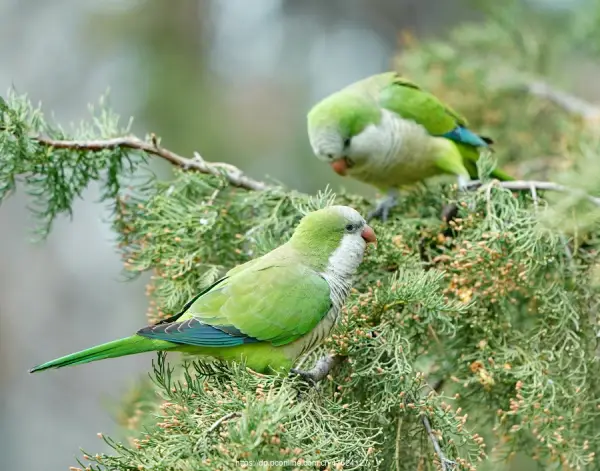

1. Average Adult Size of Monk Parakeets
1.1 Length (Beak to Tail)
- Adult length: 11–12 inches (28–30 cm)
- Measured from the tip of the beak to the end of the tail feathers
This places Monk Parakeets larger than budgies and lovebirds, but smaller than conures and cockatiels.
1.2 Weight Range
- Average adult weight: 90–140 grams
- Most healthy adults fall between 100–120 grams
Veterinarians use weight—not appearance—as the most reliable indicator of body condition.
1.3 Wingspan
- Wingspan: approximately 18–20 inches (45–50 cm)
This is important when determining cage width and supervised flight space.
2. Male vs Female Size Differences
Monk Parakeets are not sexually dimorphic in size.
- Males and females fall within the same size and weight ranges
- Any perceived difference is typically due to:
- Diet
- Activity level
- Individual genetics
Size cannot be used to determine sex.
3. Growth Timeline: From Chick to Adult
3.1 Chick to Weaning (0–8 weeks)
- Rapid weight gain
- Feathers develop by 4–5 weeks
- Body length increases quickly
3.2 Juvenile Stage (2–6 months)
- Size approaches adult length
- Weight may fluctuate during weaning
- Coordination and muscle tone develop
3.3 Full Adult Size
- Reached at 6–8 months of age
- Skeletal growth is complete
- Muscle mass continues to mature with activity
4. Factors That Influence Size
4.1 Genetics
- Wild-type vs selectively bred birds
- Regional lineage differences
4.2 Nutrition
- Balanced pellet-based diets support healthy growth
- Seed-heavy diets often lead to:
- Obesity
- Poor muscle tone
4.3 Exercise
- Flight and climbing build muscle mass
- Sedentary birds may appear smaller but weigh more due to fat accumulation
5. Comparison With Other Common Parrots
| Species | Length | Weight |
|---|---|---|
| Budgerigar | 7–8 in | 30–40 g |
| Lovebird | 5–7 in | 40–60 g |
| Cockatiel | 12–13 in | 80–120 g |
| Monk Parakeet | 11–12 in | 90–140 g |
| Conure | 12–15 in | 110–170 g |
This comparison helps owners realistically assess space and care needs.
6. Cage Size Implications (Veterinary Recommendation)
Due to their size and activity level:
- Minimum cage size (single bird):
24″ W × 24″ D × 30″ H - Bar spacing:
½ to ⅝ inch - Horizontal bars are strongly recommended for climbing
Larger is always better, especially for birds with limited flight time.
7. Does Size Affect Behavior or Health?
Yes. From a clinical perspective:
- Larger-bodied parrots require:
- Stronger perches
- Greater chewing opportunities
- Increased caloric regulation
Improper housing relative to size can lead to:
- Obesity
- Foot problems
- Muscle atrophy
8. Common Misconceptions
❌ “Monk Parakeets are small cage birds”
✔ They are medium-sized parrots requiring substantial space
❌ “They stop growing after a few months”
✔ Musculoskeletal development continues for several months
9. Veterinary Summary and Expert Opinion
As an avian veterinarian, I consider Monk Parakeets to be:
- Compact but powerful parrots
- Fully grown by 6–8 months
- Requiring housing and care appropriate for a medium-sized parrot
Understanding their true size helps prevent many of the health and behavioral issues seen in clinical practice.
Medical Disclaimer
This article is intended for educational purposes only and does not replace professional veterinary advice. For growth concerns or abnormal weight changes, consult a certified avian veterinarian.
Article title: How Big Do Monk Parakeets Get?
Article link: https://www.parrot234.com/how-big-do-monk-parakeets-get/
Disclaimer: The content of this site is contributed by users, compiled from the Internet, or edited by AI, so no guarantee can be made for the authenticity of the content! Please judge the authenticity of the content by yourself! However, if you find any suspected: plagiarism, infringement, illegal and irregular, suspected fraud, false and bad content, please contact this site in time through the "Contact & Suggestion" channel at the bottom. This site always maintains an active and cooperative attitude to deal with various problems, so after receiving the email, the corresponding content will be deleted!
