
Coughing or “cough-like” sounds in parrots are never normal and should always be taken seriously. As an avian veterinarian, I consider coughing in a green-cheeked conure (Pyrrhura molinae) a potential warning sign of respiratory or systemic disease, even if it appears mild at first.
This article explains why green-cheeked conures cough, how to recognize dangerous symptoms, and when immediate veterinary care is essential.
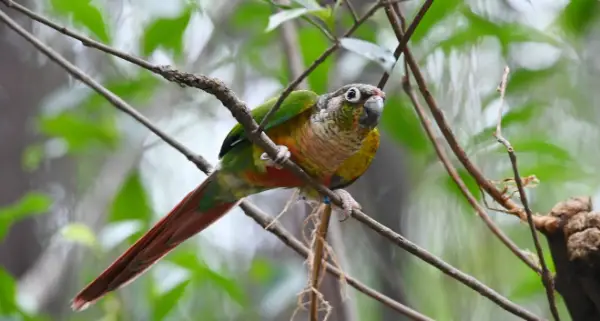

1. Understanding the Species: Why Conures Are Vulnerable
Green-cheeked conures originate from forested regions of South America and are adapted to clean, humid air environments. According to the IUCN Red List, the species is currently listed as Least Concern, but captive individuals are highly sensitive to air quality and environmental changes.
🔗 IUCN Red List – Pyrrhura molinae:https://www.iucnredlist.org/species/22685820/130103512
Their small airways and highly efficient respiratory system make them particularly susceptible to inhaled toxins, infections, and dry air.
2. Is It Really Coughing? Commonly Misinterpreted Sounds
True coughing in parrots is rare compared to mammals, but owners often describe the following as “coughing”:
- Clicking or wheezing sounds
- Repeated throat clearing motions
- Open-mouth breathing with head bobbing
- Sneezing combined with tail movement
- Gagging or stretching the neck
Any of these signs warrant closer evaluation.
3. Common Medical Causes of Coughing in Green-Cheeked Conures
A. Respiratory Infections (Most Common Cause)
Respiratory disease is one of the most frequent reasons a conure appears to cough.
Possible pathogens include:
- Bacterial infections (e.g., Chlamydia psittaci)
- Fungal infections (especially Aspergillus)
- Viral respiratory disease
Associated signs:
- Nasal discharge
- Lethargy
- Voice changes
- Reduced appetite
- Tail bobbing while breathing
Respiratory infections require veterinary diagnosis and prescription treatment.
B. Poor Air Quality or Environmental Irritants
Green-cheeked conures are extremely sensitive to airborne toxins.
Common irritants include:
- Non-stick cookware fumes (PTFE/Teflon)
- Cigarette or vape smoke
- Aerosols and cleaning sprays
- Candles and incense
- Dust, mold, or dry air
In my clinical experience, environmental exposure is a leading cause of sudden respiratory distress in pet parrots.
C. Aspiration or Foreign Material
Coughing may occur if a conure inhales:
- Food particles
- Seed hull dust
- Fine bedding debris
This can lead to aspiration pneumonia, a medical emergency.
D. Allergic or Irritative Airway Response
While true allergies are uncommon in birds, chronic exposure to:
- Dusty seed mixes
- Dirty cages
- Mold spores
can cause ongoing airway inflammation, leading to coughing-like sounds.
E. Nutritional Deficiencies (Underlying Risk Factor)
Vitamin A deficiency, common in seed-based diets, weakens the respiratory lining and increases infection risk.
Birds with poor nutrition often develop chronic respiratory symptoms.
4. Red-Flag Symptoms: When It Is an Emergency
Seek immediate avian veterinary care if coughing is accompanied by:
- Open-mouth breathing
- Tail bobbing
- Blue or darkened feet/beak
- Sudden voice loss
- Fluffed feathers and lethargy
- Refusal to eat
- Audible wheezing or clicking
Birds hide illness well—by the time symptoms are obvious, disease is often advanced.
5. What You Should NOT Do at Home
- Do not use human cough medications
- Do not wait “to see if it improves”
- Do not expose the bird to steam without veterinary advice
- Do not attempt antibiotics without diagnosis
Improper treatment can worsen respiratory disease or delay life-saving care.
6. How an Avian Veterinarian Diagnoses Coughing
A proper diagnostic work-up may include:
- Physical examination
- Auscultation (listening to airways)
- Radiographs (X-rays)
- Blood tests
- Culture or PCR testing
- Endoscopy (in advanced cases)
Accurate diagnosis is essential because treatment varies widely depending on the cause.
7. Prevention: Reducing Future Respiratory Risk
From a veterinary prevention standpoint:
- Maintain excellent indoor air quality
- Avoid fumes, smoke, and aerosols entirely
- Feed a balanced pellet-based diet
- Provide adequate humidity (40–60%)
- Clean cages and food bowls daily
- Schedule annual avian wellness exams
8. Veterinary Perspective: Final Thoughts
Coughing in a green-cheeked conure is never something to ignore. Whether caused by infection, environmental exposure, or aspiration, early intervention significantly improves outcomes.
In my clinical experience, birds presented early for respiratory signs have a much higher survival and recovery rate than those treated late.
Authoritative References
- IUCN Red List – Pyrrhura molinae:
https://www.iucnredlist.org/species/22685820/130103512 - Association of Avian Veterinarians (AAV):
https://www.aav.org - Merck Veterinary Manual – Avian Respiratory Disease:
https://www.merckvetmanual.com
Medical Disclaimer
This article is for educational purposes only and does not replace professional veterinary diagnosis or treatment. Always consult a certified avian veterinarian if your bird shows respiratory symptoms.
Article title: Why Is My Green-Cheeked Conure Coughing?
Article link: https://www.parrot234.com/why-is-my-green-cheeked-conure-coughing/
Disclaimer: The content of this site is contributed by users, compiled from the Internet, or edited by AI, so no guarantee can be made for the authenticity of the content! Please judge the authenticity of the content by yourself! However, if you find any suspected: plagiarism, infringement, illegal and irregular, suspected fraud, false and bad content, please contact this site in time through the "Contact & Suggestion" channel at the bottom. This site always maintains an active and cooperative attitude to deal with various problems, so after receiving the email, the corresponding content will be deleted!
