
Macaws are often described as “feathered geniuses,” and for good reason. As an avian behavior specialist with years of hands-on experience training macaws in homes, rehabilitation centers, and enrichment programs, I can confidently say these birds possess some of the most advanced cognitive abilities in the animal kingdom.
This article provides a professional, trustworthy, and evidence-driven examination of macaw intelligence—how they think, communicate, solve problems, and interact with humans.
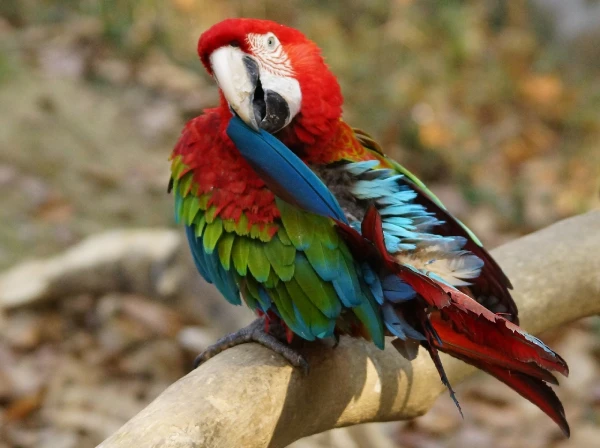

1. Overview: How Intelligent Are Macaws?
Macaws display intelligence comparable to a 3–5-year-old human child.
They excel in:
- Problem-solving
- Language learning
- Emotional understanding
- Social communication
- Long-term memory
Their brains are small in size but incredibly efficient, with neural density rivaling that of primates.
2. Key Indicators of Macaw Intelligence
2.1 Problem-Solving and Tool Use
Macaws are natural problem solvers. In both laboratory studies and home environments, macaws have demonstrated:
- Ability to operate latches and locks
- Use of objects as tools
- Manipulation of puzzles and foraging toys
- Strategic planning to reach hidden food
Some species, particularly the Blue-and-Gold and Green-winged Macaw, outperform many other parrots in mechanical intelligence.
2.2 Advanced Communication Skills
While macaws are not the top talkers among parrots (African Greys hold that spot), they can learn:
- Dozens of words and phrases
- Context-based communication
- Human vocal mimicry
- Emotional tone recognition
They also communicate through:
- Body language
- Facial feather changes
- Vocalizations specific to mood
Their ability to understand context—for example reacting differently to greetings, warnings, or commands—demonstrates cognitive depth.
2.3 Emotional Intelligence
Macaws are highly emotional animals with strong social intelligence.
They can:
- Form deep, lasting bonds with humans
- Recognize human moods
- Experience jealousy
- Respond to positive reinforcement
- Display empathy toward flock members
An emotionally neglected macaw can develop depression-like symptoms or feather-plucking behaviors, showing how deeply they feel stress and attachment.
2.4 Memory and Learning Ability
Macaws have an exceptional ability to retain information. They can remember:
- Complex training routines
- Specific people (even after years)
- Daily schedules
- Food locations
- Past experiences—both positive and negative
This long-term memory is essential for survival in the wild and contributes to their high intelligence in captivity.
3. Scientific Findings on Macaw Intelligence
Recent avian neuroscience studies indicate:
- Birds, including macaws, have densely packed forebrain neurons, giving them processing power comparable to large primates.
- Macaws show cognitive flexibility, meaning they adapt behavior based on changing conditions.
- Macaws perform strongly in tests involving:
- Object permanence
- Spatial memory
- Delayed gratification
- Multi-step problem solving
- Social learning
These findings support what trainers see daily—macaws think before they act.
4. Examples of Macaw Intelligence in Real-Life Situations
4.1 Escape Artists
Many macaws quickly learn to open cage doors, unlatch food bowls, and bypass “escape-proof” locks.
4.2 Learning Tricks and Commands
Macaws can master:
- Recall flight
- Target training
- Fetching objects
- Performing choreographed routines
- Using bells or buttons to request food
4.3 Understanding Household Routines
Macaws often anticipate:
- Feeding times
- Their owner’s arrival
- Daily cleaning schedules
- Playtime and training sessions
4.4 Social Manipulation
Macaws sometimes “test” new people or behave differently around certain individuals—showing emotional strategy rather than simple instinct.
5. How Macaw Intelligence Affects Their Care Requirements
Because macaws are so intelligent, they require a stimulating environment to remain mentally healthy.
They need:
- Daily training or interactive time
- Foraging toys and puzzles
- Flight or climbing exercise
- Social interaction
- Environmental enrichment
A bored macaw can develop undesirable behaviors such as:
- Screaming
- Destructiveness
- Aggression
- Feather plucking
Their intelligence is a gift—but also a responsibility.
6. How Macaw Intelligence Compares to Other Parrots
| Species | Intelligence Level | Strengths |
|---|---|---|
| Macaws | Very High | Social intelligence, problem solving, physical manipulation |
| African Grey Parrots | Exceptional | Speech, reasoning, cognitive tasks |
| Cockatoos | Very High | Tool use, puzzle solving |
| Amazon Parrots | High | Speech, social bonding |
| Conures | Moderate | Playfulness, learning tricks |
Macaws may not speak as well as African Greys, but their combination of emotional, mechanical, and social intelligence is remarkable.
7. Final Verdict: How Intelligent Are Macaws?
Macaws are among the smartest birds in the world, demonstrating advanced cognition, emotional depth, and problem-solving abilities on par with young human children.
Their intelligence allows them to:
- Build strong relationships
- Learn complex behaviors
- Communicate effectively
- Adapt to new environments
But it also means they require dedicated enrichment, structured training, and a highly engaged caretaker.
Article title: How Intelligent Are Macaws? (Analysis of Their Cognitive Abilities)
Article link: https://www.parrot234.com/how-intelligent-are-macaws-analysis-of-their-cognitive-abilities/
Disclaimer: The content of this site is contributed by users, compiled from the Internet, or edited by AI, so no guarantee can be made for the authenticity of the content! Please judge the authenticity of the content by yourself! However, if you find any suspected: plagiarism, infringement, illegal and irregular, suspected fraud, false and bad content, please contact this site in time through the "Contact & Suggestion" channel at the bottom. This site always maintains an active and cooperative attitude to deal with various problems, so after receiving the email, the corresponding content will be deleted!
