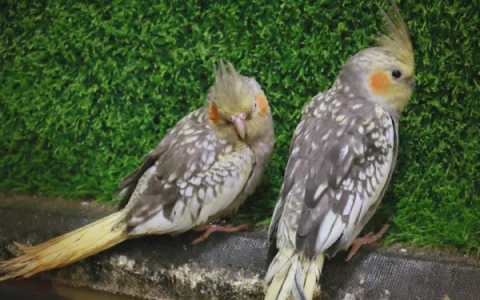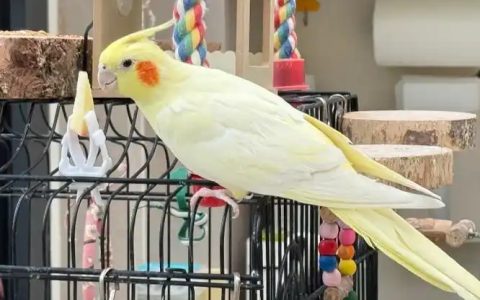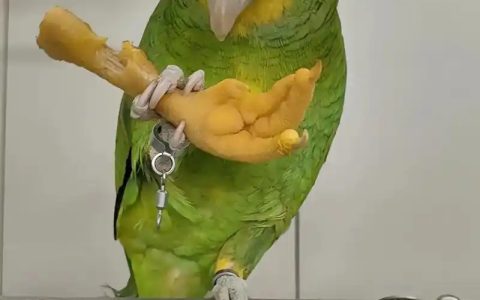
Cockatiels (Nymphicus hollandicus) are among the most popular companion parrots worldwide, prized for their gentle temperament and expressive vocalizations. One of the most common questions I hear from prospective and new owners in clinical practice is:
Do cockatiels talk, or do they whistle—and what should owners realistically expect?
The answer is nuanced. Cockatiels are far more accomplished whistlers than talkers, and understanding this distinction is essential for responsible ownership.
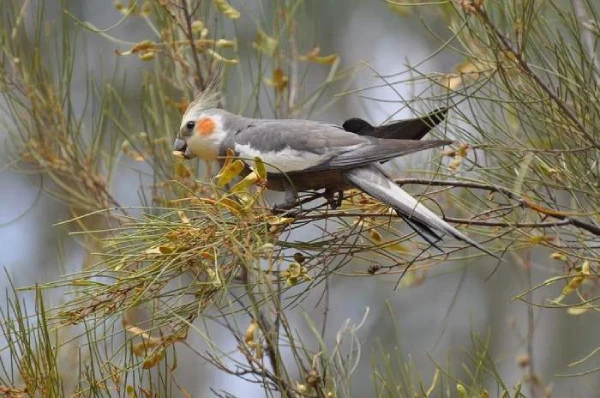
1. Do Cockatiels Talk?
Yes—some cockatiels can learn to say a few words, but their talking ability is limited compared to larger parrots.
Key characteristics of cockatiel speech:
- Vocabulary is usually small (a few words or short phrases)
- Words may sound soft, raspy, or unclear
- Talking is not guaranteed, even with training
In veterinary behavioral observations, speech is best viewed as an occasional bonus, not a defining trait of the species.
2. Cockatiels Are Natural Whistlers
2.1 Whistling Is Their Primary Vocal Skill
Cockatiels excel at:
- Whistling melodies
- Mimicking tunes, alarms, and household sounds
- Creating complex, repetitive song patterns
Many cockatiels can accurately reproduce entire tunes, such as phone ringtones or short songs, with impressive consistency.
2.2 Why Whistling Comes Naturally
In the wild, cockatiels use whistling for:
- Flock communication
- Mate attraction
- Territory awareness
This instinctive behavior remains strong in captivity.
3. Male vs Female: Who Talks or Whistles More?
From both clinical experience and published avian behavior research:
- Male cockatiels are significantly more vocal
- Males whistle more frequently and are more likely to mimic words
- Female cockatiels tend to be quieter and rarely talk
Sex-linked vocal differences are well documented in Nymphicus hollandicus.
4. When Do Cockatiels Start Vocalizing?
| Age | Expected Vocal Behavior |
|---|---|
| 2–4 months | Chirping, contact calls |
| 4–8 months | Practice whistles |
| 6–12 months | Song development, occasional words |
| Adult | Stable vocal patterns |
Early socialization strongly influences confidence and vocal output.
5. Can You Train a Cockatiel to Talk?
5.1 What Works Best (Veterinary Guidance)
- Short, repetitive words (“hello,” “pretty bird”)
- Calm, quiet training environments
- Positive reinforcement only
- Consistent daily interaction
5.2 What to Avoid
- Forcing interaction
- Loud or chaotic environments
- Punishment (damages trust and learning)
Even with ideal training, many cockatiels will prefer whistling over speech.
6. Why Some Cockatiels Never Talk
This is normal and not a health or intelligence issue.
Common reasons include:
- Individual personality differences
- Preference for musical sounds
- Limited early exposure to human speech
- Sex (female birds)
As an avian veterinarian, I emphasize that a quiet cockatiel is still a healthy cockatiel.
7. Health Factors That Affect Vocalization
Reduced vocal activity may signal:
- Respiratory illness
- Nutritional deficiencies (especially vitamin A)
- Stress or environmental changes
🔗 Association of Avian Veterinarians
https://www.aav.org
Any sudden vocal change warrants a veterinary evaluation.
8. Conservation and Species Background
Cockatiels are native to Australia and are widely bred in captivity.
According to the IUCN Red List, the cockatiel (Nymphicus hollandicus) is classified as Least Concern, with stable wild populations.
🔗 IUCN Red List – Cockatiel
https://www.iucnredlist.org/species/22684828/131897245
Responsible captive breeding reduces pressure on wild populations.
9. What Owners Should Expect (Realistic Summary)
✔ Expect frequent whistling and musical ability
✔ Expect strong emotional expression through sound
✖ Do not expect advanced talking
✔ Appreciate vocal personality rather than vocabulary size
Cockatiels communicate more through tone, rhythm, and body language than words.
10. Veterinarian’s Final Verdict
- Cockatiels can talk, but only minimally
- Cockatiels excel at whistling and mimicry
- Males are more vocal than females
- Whistling is a natural, healthy behavior
- Choosing a cockatiel for companionship—not speech—is key to long-term satisfaction
Authoritative References
- IUCN Red List – Nymphicus hollandicus
https://www.iucnredlist.org/species/22684828/131897245 - Association of Avian Veterinarians
https://www.aav.org - Merck Veterinary Manual – Avian Behavior
https://www.merckvetmanual.com - Ritchie BW, Harrison GJ, Harrison LR. Avian Medicine: Principles and Application
Veterinary Disclaimer
This article is intended for educational purposes only and does not replace professional veterinary advice. Consult a certified avian veterinarian for individual behavioral or medical concerns.
Article title: Do Cockatiels Talk or Whistle? What Owners Should Expect
Article link: https://www.parrot234.com/do-cockatiels-talk-or-whistle-what-owners-should-expect/
Disclaimer: The content of this site is contributed by users, compiled from the Internet, or edited by AI, so no guarantee can be made for the authenticity of the content! Please judge the authenticity of the content by yourself! However, if you find any suspected: plagiarism, infringement, illegal and irregular, suspected fraud, false and bad content, please contact this site in time through the "Contact & Suggestion" channel at the bottom. This site always maintains an active and cooperative attitude to deal with various problems, so after receiving the email, the corresponding content will be deleted!