1. What is a Healthy Cockatiel Diet?
A species-appropriate cockatiel diet is not merely about avoiding starvation; it’s a deliberate nutritional strategy mimicking the diversity of their native Australian habitat. It balances core nutrients to support a high metabolism, immune function, and psychological enrichment through foraging.
- Key Distinction vs. Generic “Bird Seed” Diets: A common mistake is relying solely on commercial seed mixes. These are often high in fat and low in essential vitamins (like A and D) and calcium, leading to malnutrition. A holistic cockatiel diet incorporates pellets, fresh foods, and limited seeds as a supplement or treat.
- The Four Pillars of Cockatiel Nutrition:
- High-Quality Pellets: Should form 60-70% of the base diet, providing balanced, fortified nutrition.
- Fresh Vegetables & Greens: A daily staple for vitamins, minerals, and hydration.
- Limited Fruits & Treats: Offered in moderation for variety and enrichment.
- Clean Water & Mineral Supplements: Constant access to fresh water and a cuttlebone for calcium.
2. Why is a Proper Diet Non-Negotiable?
Poor nutrition is a leading cause of health issues in captive cockatiels. According to the Association of Avian Veterinarians, over 80% of clinical visits relate to dietary deficiencies. Neglecting this area leads to:
- Fatty Liver Disease & Obesity: From seed-heavy diets.
- Vitamin A Deficiency: Causes respiratory issues, poor feather quality, and weakened immunity.
- Calcium Hypocalcemia: Especially critical in laying hens, leading to egg binding and brittle bones.
3. Core Dietary Strategy: The Safe & Forbidden Framework
The most actionable strategy is mastering the “Yes” and “No” lists. This prevents emergency vet visits and builds dietary confidence.
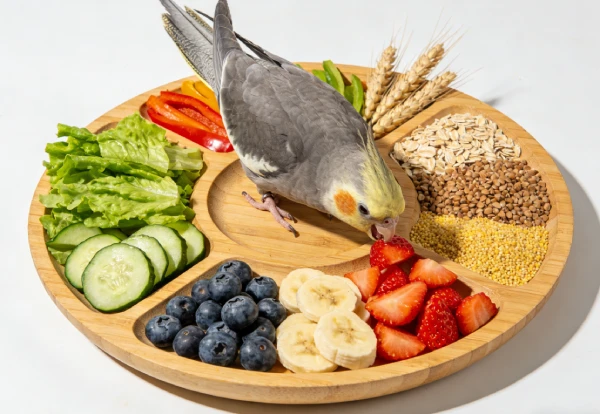
Strategy 1: The Daily Plate Composition
Follow a simple visual ratio for each meal:
- 50% High-quality pellets (e.g., Harrison’s, TOP’s, Roudybush).
- 45% Chopped fresh vegetables (dark leafy greens, sweet potatoes, peppers).
- 5% Treats (a small piece of fruit, a spray of millet, or a healthy seed).
Strategy 2: Implementing the Safe vs. Toxic Food Lists
Use the table below as your primary reference. Always introduce new foods in tiny amounts.
| SAFE & RECOMMENDED FOODS | TOXIC & HAZARDOUS FOODS (Never Feed) |
|---|---|
| Vegetables: Kale, spinach*, carrots, broccoli, sweet potato (cooked), bell peppers, zucchini. | Avocado (persin toxin), onions, garlic, mushrooms. |
| Greens: Romaine, Swiss chard, dandelion greens. | Chocolate, caffeine (theobromine toxicity). |
| Fruits (in moderation): Berries, melon, apple (no seeds), pear, papaya. | Apple seeds, cherry/pit fruit pits (contain cyanide). |
| Grains/Legumes: Cooked quinoa, brown rice, lentils, sprouted seeds. | Alcohol, salty/sugary snacks, junk food. |
| Healthy Treats: Spray millet, unsalted nuts (rarely), hard-boiled egg (occasionally). | High-fat, salty foods like chips, or anything with artificial sweeteners (xylitol). |
*Spinach in moderation due to oxalates; rotate with other greens.
4. A 4-Week Actionable Implementation Plan
Transitioning a seed-addicted cockatiel requires patience. Never starve your bird into submission.
- Week 1-2: Observation & Introduction. Note current food intake. Place a bowl of pellets next to the familiar seed bowl. Offer a single new vegetable, finely chopped, in a separate dish in the morning.
- Week 3-4: Gradual Replacement. Slowly reduce the seed mix volume by 10% every few days while increasing pellets. Experiment with different vegetable shapes (grated, sliced) and offer them via foraging toys.
- Week 5+: Consistency & Variety. Maintain the 50/45/5 ratio. Establish a weekly “veggie chop” routine, mixing 3-4 different vegetables for convenience. Weigh your bird monthly to monitor health.
5. Your Top Cockatiel Diet Questions Answered
Q1: My cockatiel only eats seeds. How do I change this?
A: This is common. Birds imprint on food. Start by mixing a very small amount of crushed pellets into their seeds. Gradually increase the pellet ratio over 6-8 weeks. Persistence is key—it can take dozens of presentations before they try a new food.
Q2: Can I share a bite of my avocado toast or chocolate with my bird?
A: Absolutely not. Avocado contains persin, and chocolate contains theobromine—both are cardiac toxins to birds and can be fatal. A single bite or lick is enough to cause serious harm. Stick to approved safe foods.
Q3: Is tap water safe for my cockatiel?
A: It depends on your local water quality. Chlorine, chloramines, and heavy metals can be harmful. The safest practice is to offer filtered or bottled spring water. Change water at least twice daily to prevent bacterial growth.
Q4: How do I know if my cockatiel is getting the right nutrition?
A: Look for bright eyes, smooth and vibrant feathers, consistent droppings (with both solid and liquid parts), and high energy levels. Annual check-ups with an avian veterinarian are the best way to catch any nutritional deficiencies early.
6. Conclusion
Your cockatiel’s health is directly served at its food bowl. Move beyond guesswork and embrace the role of a nutritional guardian. Start today: Audit your current food stash, discard anything hazardous, and introduce one new safe vegetable this week. By committing to a balanced cockatiel diet, you are investing in countless more years of chirps, whistles, and companionship with your feathered friend.
Statement:This guide is formulated based on established avian nutritional principles and guidelines from reputable avian veterinary associations. For personalized advice, especially for birds with health conditions, always consult a certified avian veterinarian. Key recommendations align with resources from the Association of Avian Veterinarians (AAV) and educational materials from avian health experts.
Article title: Cockatiel Diet Explained: What Cockatiels Can and Cannot Eat
Article link: https://www.parrot234.com/cockatiel-diet-explained/
Disclaimer: The content of this site is contributed by users, compiled from the Internet, or edited by AI, so no guarantee can be made for the authenticity of the content! Please judge the authenticity of the content by yourself! However, if you find any suspected: plagiarism, infringement, illegal and irregular, suspected fraud, false and bad content, please contact this site in time through the "Contact & Suggestion" channel at the bottom. This site always maintains an active and cooperative attitude to deal with various problems, so after receiving the email, the corresponding content will be deleted!