Blue macaws are among the most striking and recognizable parrots in the world. However, the term “blue macaw” can refer to several species, each with very different conservation statuses, behaviors, and requirements. As an avian veterinarian, I advise prospective owners to understand these distinctions before considering one as a companion bird.
This article evaluates which blue macaws can legally and ethically be kept as pets, the challenges involved, and whether these birds are suitable for most households.
1. What Species Are Considered “Blue Macaws”?
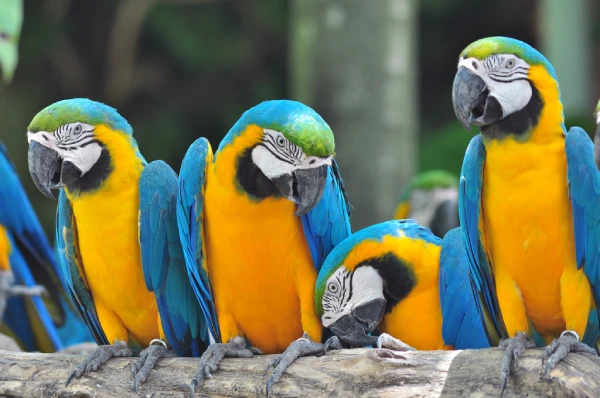
The phrase “blue macaw” commonly refers to:
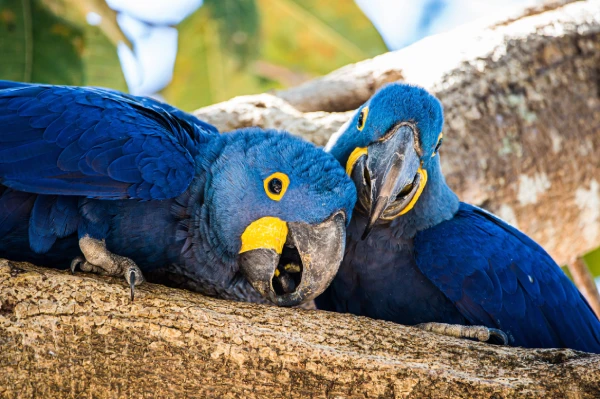
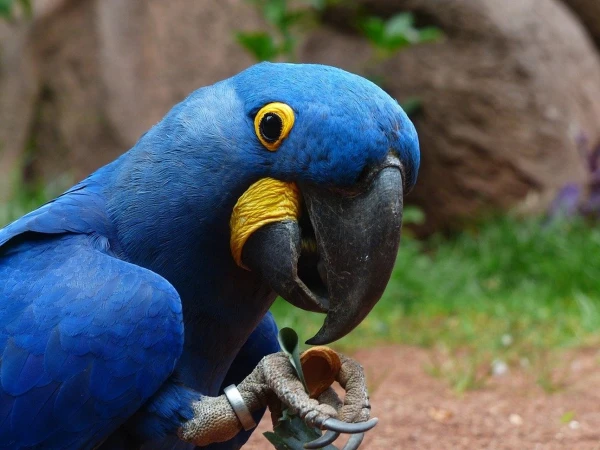
1.1 Hyacinth Macaw (Anodorhynchus hyacinthinus)
- The largest parrot species in the world
- Brilliant cobalt-blue plumage
- Legal in captivity when bred domestically
- Requires extensive space and very experienced owners
1.2 Blue-throated Macaw (Ara glaucogularis)
- Critically endangered in the wild
- Legal only from registered, captive-bred sources
- Highly intelligent and demanding
1.3 Lear’s Macaw (Anodorhynchus leari)
- Endangered species
- Rarely available as pets
- Generally kept only by licensed breeders or conservation programs
1.4 Spix’s Macaw (Cyanopsitta spixii)
- Known as the “Blue Macaw” from Rio
- Extinct in the wild for many years
- Now part of government-managed breeding programs
- Not available as a household pet
2. Can Blue Macaws Be Pets?
The answer depends on the specific species.
2.1 Species Commonly Kept as Pets
Hyacinth Macaw
Blue-throated Macaw (captive-bred only)
These species can legally be owned, provided that the bird comes from a licensed breeder and complies with export, import, and CITES regulations.
2.2 Species That Cannot Be Pets
Spix’s Macaw and Lear’s Macaw are generally not accessible for private ownership due to strict conservation controls.
3. Legal and Ethical Considerations
Blue macaws fall under CITES Appendix I or II depending on the species. Owners must verify:
- Legal breeding certificates
- Import/export permits
- Microchip identification
- Compliance with state and federal regulations
Never purchase a blue macaw without legal documentation. Illegal trade contributes significantly to population decline.
4. Are Blue Macaws Suitable as Pets?
While blue macaws can be pets, they are not suitable for most households. Their care requires advanced experience, long-term commitment, and substantial resources.
4.1 Size and Space Requirements
- Hyacinth macaws reach up to 100 cm (40 in) in length
- Require flight aviaries, not standard cages
- Need significant indoor and outdoor space
4.2 Behavioral Needs
Blue macaws are highly intelligent and emotionally complex. They require:
- Daily free-flight or large exercise areas
- Several hours of human interaction
- Constant mental stimulation through training and enrichment
- Extremely durable chew toys to manage strong beak activity
Without these, behavioral disorders (screaming, aggression, feather plucking) are common.
4.3 Diet Considerations
Hyacinth macaws have a specialized diet including:
- High-fat nuts (palm nuts, macadamia, Brazil nuts)
- Fresh fruits and vegetables
- High-quality formulated pellets
Improper diet is a leading cause of liver disease in captive macaws.
4.4 Veterinary Care
Routine care requires:
- Annual wellness exams
- Regular blood panels
- Beak and nail assessments
- Monitoring for fungal respiratory disease, calcium deficiencies, and stress-related conditions
5. Cost Considerations
Blue macaws are among the most expensive parrots in the pet trade.
Typical price ranges:
- Hyacinth Macaw: USD 12,000–20,000
- Blue-throated Macaw: USD 8,000–15,000
In addition to purchase cost, owners should expect high expenses for:
- Large custom aviaries
- Specialty diets
- Enrichment toys
- Long-term veterinary care
6. Longevity and Commitment
Blue macaws live 50–80 years in human care. Ownership is a multidecade responsibility, often extending beyond a single owner’s lifetime.
Prospective owners must prepare for:
- Long-term housing stability
- Succession planning
- Financial commitment over decades
7. When Is It Appropriate to Own a Blue Macaw?
A blue macaw may be appropriate if:
- You have extensive experience with large parrots
- You can dedicate several hours daily to training and interaction
- You have a large, safe, enriched environment
- You can support long-term veterinary costs
- You can legally obtain the bird from a reputable breeder
It is not suitable for beginners or households with limited space or time.
8. Conclusion
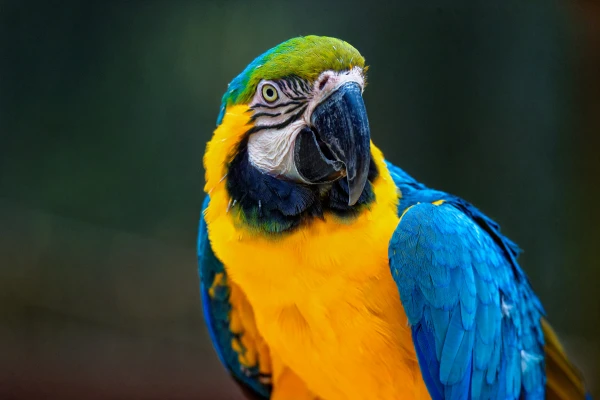
Yes, certain species of blue macaws—primarily the Hyacinth Macaw and Blue-throated Macaw—can be kept as pets, but they require an exceptional level of care, expertise, and financial commitment. Many blue macaws, especially endangered species, are restricted to conservation programs and cannot be owned privately.
For the right owner, a blue macaw can be a remarkable and deeply rewarding companion. However, for most people, these birds’ extreme space, behavioral, and longevity requirements make them challenging to keep responsibly.
Article title: Can Blue Macaws Be Pets?
Article link: https://www.parrot234.com/can-blue-macaws-be-pets/
Disclaimer: The content of this site is contributed by users, compiled from the Internet, or edited by AI, so no guarantee can be made for the authenticity of the content! Please judge the authenticity of the content by yourself! However, if you find any suspected: plagiarism, infringement, illegal and irregular, suspected fraud, false and bad content, please contact this site in time through the "Contact & Suggestion" channel at the bottom. This site always maintains an active and cooperative attitude to deal with various problems, so after receiving the email, the corresponding content will be deleted!